Why Allergy-Friendly Flooring Matters in Bothell Homes
Bothell homes deal with more than rainy shoes and muddy paws. Seasonal pollen from tall maples, Pacific Northwest dampness, and indoor dust can all trigger sneezes and itchy eyes. For families balancing kids, pets, and sensitive lungs, flooring is more than a design choice—it’s part of the home’s health system.
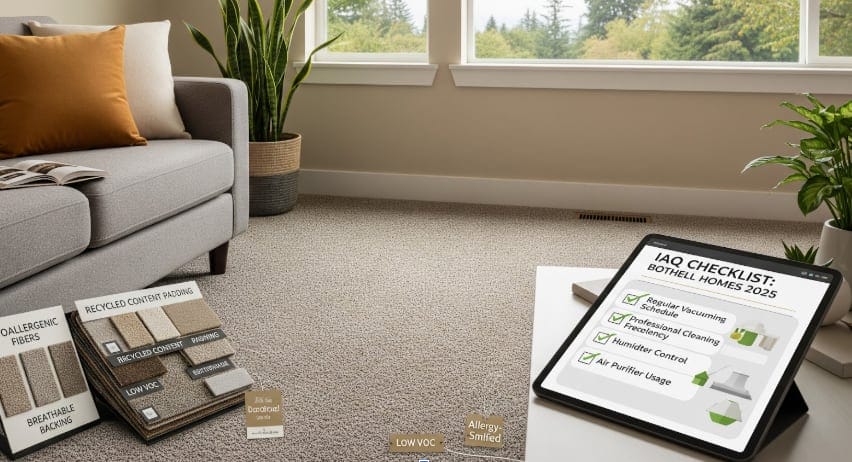
Carpet has a reputation for trapping allergens, but modern materials and construction flip that script. Allergy-smart carpet can actually capture dust and pollen until you vacuum, instead of letting them float through the air. Add hypoallergenic padding and a regular care routine, and carpet can improve indoor air quality (IAQ) instead of working against it.
Bothell homeowners often ask: Which carpet fibers help the most? What padding keeps moisture down? How do I know if my flooring setup supports cleaner air? This guide breaks it all down into simple, practical steps so you can pick flooring that looks good and helps your family breathe easier.
Carpet Fibers That Support Allergy-Friendly Living
Not all carpet fibers are created equal when it comes to indoor air quality. Choosing wisely makes daily life more comfortable for allergy-sensitive households.
Nylon
-
Durable, easy to clean, and resists matting.
-
Modern treatments add stain protection without harsh chemicals.
-
A solid, balanced choice for active families.
Polyester (PET)
-
Naturally stain-resistant and soft underfoot.
-
Performs well in lower-traffic bedrooms or play areas.
-
Often available in eco-friendly recycled content.
Triexta (PTT)
-
Known for softness and built-in stain resistance.
-
Low absorption helps prevent allergens from sticking.
-
Good option for mixed-use rooms like family dens.
Wool
-
Natural and breathable, with built-in resistance to dust mites.
-
Holds moisture if not managed, so best in controlled spaces.
-
Great for eco-conscious households who value natural fibers.
Bothell’s damp climate means synthetic fibers often outperform natural options in high-traffic spaces, but wool still has a place for style-focused, lower-humidity rooms. Pairing the right fiber with smart padding (next section) gives you both comfort and IAQ benefits.
Padding and Underlay: The Hidden Layer That Matters
Padding is more than cushion—it directly affects how carpet handles moisture, dust, and air quality.
Moisture-barrier padding
-
Stops spills from seeping into the subfloor.
-
Prevents mold growth that can trigger allergies.
-
Especially useful near entryways or basements.
Hypoallergenic padding
-
Made with fewer VOCs (volatile organic compounds).
-
Designed to resist dust mite buildup.
-
A good fit for bedrooms and nurseries.
Memory foam padding
-
Luxurious underfoot, but only choose versions rated for low emissions.
-
Works well in living areas where comfort is a top priority.
Rubber or felt padding
-
Dense and durable.
-
Great under heavy furniture in family rooms.
-
Often recommended for eco-conscious buyers.
Tip: Always check certifications like Green Label Plus, which confirms low emissions and allergy-friendly performance. When paired with the right fiber, the right padding can transform carpet into an IAQ ally instead of a dust trap.
Indoor Air Quality and Carpet: Busting Old Myths
For decades, people assumed carpet made allergies worse. Today’s research tells a different story.
Fact check:
-
Carpets hold dust and allergens until they’re vacuumed, rather than letting them circulate.
-
Low-VOC adhesives and backings reduce indoor emissions.
-
Proper ventilation and regular cleaning maximize carpet’s role as a filter.
Bothell homes with newer HVAC systems and HEPA filters see the biggest improvement when pairing allergy-smart carpet with whole-home air quality solutions. A balanced approach creates a cleaner indoor environment for everyone.
Common myths cleared up:
-
“All carpet causes mold.” Not true—moisture management and quality padding prevent it.
-
“Carpet can’t work in allergy-prone households.” With the right fiber and care, it often performs better than hard floors for pollen control.
-
“Vacuuming stirs allergens up.” Modern HEPA vacuums trap particles instead of releasing them.
Maintenance Checklist for Allergy-Smart Carpets
Carpet is only as allergy-friendly as the care it receives. Here’s a simple, practical routine for Bothell households.
-
Vacuuming: Use a HEPA-filter vacuum 2–3 times per week, more during peak pollen seasons.
-
Deep cleaning: Schedule professional hot water extraction every 12–18 months to flush allergens.
-
Humidity control: Keep indoor levels between 30–50% with dehumidifiers or HVAC systems.
-
Entry management: Place mats at doors and consider a no-shoes policy to cut down on outdoor dust.
-
Pet care: Regular brushing and paw wipes reduce dander and tracked-in particles.
Pairing consistent maintenance with allergy-smart carpet and padding delivers the IAQ benefits homeowners want without sacrificing comfort.
Style Meets Health: Carpet Design for Bothell Families
You don’t have to give up style to create a healthier home. Allergy-friendly carpets come in looks that fit every Bothell neighborhood, from modern condos to traditional craftsman homes.
Colors that help
-
Mid-tones hide dust better than extremes like pure white or deep black.
-
Patterned designs disguise minor pollen spots or tracked dirt.
Pile choices
-
Low pile or cut-pile styles trap fewer allergens than long, shaggy textures.
-
Loop piles resist matting but need to be pet-safe to avoid snags.
Eco-conscious options
-
Recycled polyester blends combine sustainability with clean-air benefits.
-
Wool in controlled spaces offers natural warmth with allergy-smart potential.
Carpet can look stylish, feel soft, and actively support indoor wellness when chosen thoughtfully. That’s what makes it such a strong choice for Bothell homes in 2025.
When to Choose Carpet Over Hard Flooring in Allergy-Prone Homes
Hard flooring gets credit for being “cleaner,” but that isn’t always true. Here’s where carpet pulls ahead.
-
Bedrooms: Softness and warmth combine with better dust capture.
-
Living rooms: Reduces echo and noise, while holding allergens in place until vacuuming.
-
Stairs: Safer and quieter, with allergy-smart fibers that still support IAQ.
Hard floors may work well in kitchens and baths, but carpet brings comfort and allergy-friendly benefits to the rooms you use most.
If you’re curious about the latest options, Bothell families can explore carpet flooring selections designed for both comfort and air quality.
Planning Your Next Step Toward a Healthier Home
Allergy-smart carpet is more than flooring—it’s a lifestyle upgrade for families who want healthier air, less pollen floating around, and more comfort underfoot. By pairing the right fiber with moisture-resistant padding and consistent maintenance, Bothell homeowners can enjoy the best of both worlds: cozy style and cleaner indoor air.
If you’re weighing options, the team at Nielsen Brothers Flooring can help match the right carpet to your family’s needs and local climate. And when you’re ready to make your home both healthier and more beautiful, don’t hesitate to get in touch.