
Why Condo Flooring Rules Matter in Kirkland, WA
Condo living in Kirkland offers many advantages—beautiful neighborhoods, easy access to Seattle, and modern residential buildings designed for convenience. But one unique factor that condo owners must consider before installing new floors is sound transmission. Because condos share walls, ceilings, and floors, sound travels more easily between units. That’s why most homeowner associations (HOAs) enforce flooring guidelines that help reduce noise between neighbors.
Understanding these rules early can save homeowners time and prevent installation delays. When the right flooring system is chosen from the beginning, it’s easier to enjoy stylish floors while still meeting building requirements.
Many homeowners begin their flooring search by consulting experienced local professionals like Nielsen Brothers Flooring, a family-owned business that has served the Seattle metro area since 1946. Working with knowledgeable flooring experts helps condo owners understand which materials and installation systems are designed to meet HOA sound standards.
Condo Living and Shared Structures
Unlike single-family homes, condos are built with shared structural components. The floor in one unit is often the ceiling in the unit below. This design means footsteps, dropped objects, and furniture movement can travel through the building.
Without proper flooring systems in place, even normal daily activity may create noticeable sound for neighbors.
Common HOA Flooring Restrictions
Most condo associations in Kirkland require flooring installations to meet minimum sound-control standards. These rules may include:
-
Required sound ratings
-
Approved underlayment materials
-
Installation methods
-
HOA review before installation
These requirements help maintain comfort for everyone living in the building.
Why Laminate Flooring Is Popular in Condos
Laminate flooring has become a preferred option for many condo owners because it offers the appearance of natural wood while remaining durable and easy to maintain. When paired with the right acoustic underlayment, laminate flooring can perform well within HOA sound guidelines.
Understanding Sound Ratings in Condo Flooring
One of the first things condo owners encounter when reviewing HOA guidelines is sound rating requirements. These ratings help measure how well flooring systems reduce noise transmission between units.
While the terminology might seem technical at first, understanding the basics makes it easier to choose compliant flooring.
What Is Impact Insulation Class (IIC)?
IIC stands for Impact Insulation Class. This rating measures how well a floor reduces sound created by physical impact.
Examples include:
-
Footsteps
-
Furniture movement
-
Dropped objects
A higher IIC rating means the flooring system absorbs more impact sound before it travels to the unit below.
What Is Sound Transmission Class (STC)?
STC refers to Sound Transmission Class. This rating measures airborne sound traveling through a structure.
Examples include:
-
Voices
-
Television audio
-
Music
Buildings often establish minimum STC levels to help maintain a quiet living environment.
Typical HOA Sound Requirements
Each building has its own standards, but many condo associations require flooring systems to achieve ratings such as:
-
IIC 50 or higher
-
STC 50 or higher
These numbers may vary depending on building construction and local regulations.
Why Underlayment Matters
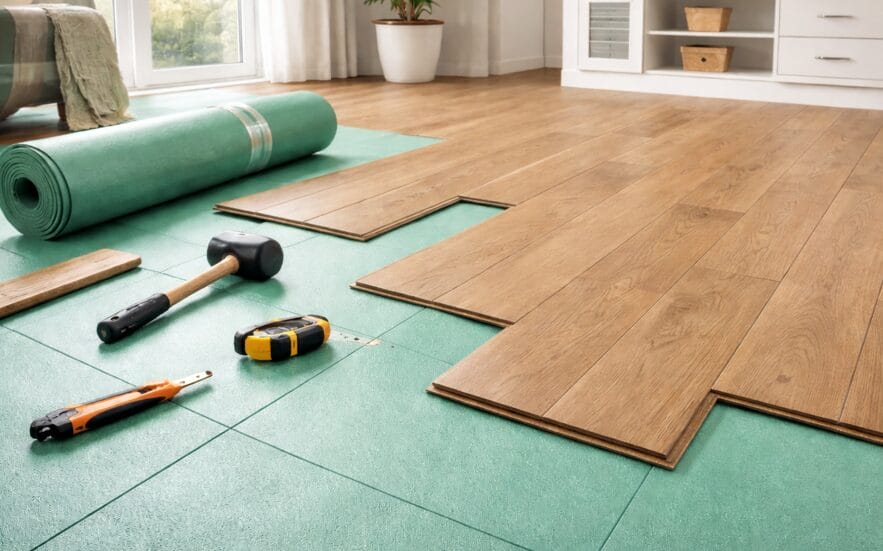
Underlayment is the layer installed between the subfloor and the finished flooring. In condos, underlayment plays a critical role in reducing sound transmission.
Even high-quality flooring may fail to meet HOA standards without proper acoustic underlayment.
Why Laminate Flooring Works Well in Kirkland Condos
Laminate flooring continues to be a popular choice in condos throughout Kirkland because it combines durability, style, and practicality. Modern laminate designs offer the appearance of hardwood while providing strong performance in active homes.
Durable Surface for Everyday Living
Laminate flooring includes a protective wear layer designed to resist scratches and daily wear. This durability makes it suitable for busy households and condo environments where long-lasting flooring is important.
Stylish Designs That Fit Modern Interiors
Many laminate styles replicate natural wood grain patterns and textures. These designs work beautifully in modern condos where homeowners want the warmth of wood without the maintenance requirements of traditional hardwood.
Homeowners comparing flooring options often explore laminate flooring because it provides both style and practicality.
Floating Installation Systems
Laminate floors are typically installed as floating systems, meaning the planks lock together rather than attaching directly to the subfloor.
This installation method works well with acoustic underlayment, helping reduce sound transmission while maintaining stability.
Types of Underlayment That Help Laminate Pass Condo Sound Rules
Choosing the correct underlayment is one of the most important steps in meeting HOA flooring standards. Different materials provide different levels of sound absorption and comfort.
Understanding these options helps condo owners select the best solution for their building.
Foam Underlayment
Foam underlayment is one of the most common choices used with laminate flooring. It provides cushioning beneath the floor while helping reduce moderate sound transmission.
Benefits include:
-
Lightweight material
-
Simple installation
-
Cost-effective sound reduction
Foam works well in buildings with moderate sound-control requirements.
Rubber Underlayment
Rubber underlayment is often recommended for buildings with stricter sound standards. This material offers excellent sound absorption and durability.
Advantages include:
-
Strong acoustic performance
-
Long-lasting resilience
-
Effective impact noise reduction
Rubber underlayments are commonly used in high-rise condos.
Cork Underlayment
Cork underlayment offers a natural sound-absorbing solution that appeals to environmentally conscious homeowners.
Benefits include:
-
Natural acoustic insulation
-
Renewable material
-
Comfortable cushioning underfoot
Cork helps reduce both airborne and impact sound.
Advanced Acoustic Underlayment Systems
Some modern underlayment products are specifically designed for multi-family housing. These advanced systems combine multiple layers to achieve higher sound ratings.
Features may include:
-
High IIC and STC ratings
-
Integrated moisture protection
-
Long-term durability
These systems are often recommended for condo installations requiring strict compliance.
Choosing the Right Underlayment for Kirkland Condo Buildings
Every condo building has different construction characteristics and HOA guidelines. Choosing the right underlayment involves balancing several important factors.
Reviewing HOA Flooring Requirements
Before selecting flooring, homeowners benefit from reviewing their HOA documents carefully. These guidelines often specify acceptable sound ratings and approved installation methods.
Understanding these requirements early helps avoid surprises during installation.
Selecting Approved Flooring Systems
Some laminate flooring products are designed as part of complete acoustic systems that include recommended underlayment.
Using tested systems can help ensure the flooring meets building sound standards.
Comfort and Sound Control Together
In addition to reducing sound transmission, underlayment also contributes to walking comfort. A well-chosen underlayment creates a softer feel while improving the acoustic performance of the floor.
This combination helps condo owners enjoy both comfort and compliance.
Installation Practices That Help Floors Meet HOA Standards
Even the best materials may fail to perform properly if installation techniques are not handled correctly. Professional installation plays a key role in meeting condo sound requirements.
Proper Subfloor Preparation
Before installing flooring, the subfloor should be inspected and prepared. A smooth and level surface ensures the flooring system performs as intended.
Uneven surfaces can create noise or reduce acoustic performance.
Maintaining Expansion Gaps
Laminate floors require small expansion gaps along walls to allow natural movement. These gaps help prevent flooring from shifting or creating unwanted noise.
Professional installers ensure these details are handled carefully.
Correct Transition Installation
Transitions between rooms and flooring types also influence sound performance. Properly installed transitions help maintain acoustic integrity across the flooring system.
Attention to these details supports long-term performance.
Avoiding Common Condo Flooring Mistakes
Many condo owners encounter challenges when installing flooring because HOA guidelines were not fully understood beforehand. Avoiding these common mistakes helps ensure a smooth installation process.
Installing Flooring Without HOA Approval
Some buildings require flooring plans to be reviewed before installation begins. Skipping this step may result in costly reinstallation if the flooring fails to meet requirements.
Choosing Incompatible Underlayment
Selecting the wrong underlayment may prevent the flooring from reaching required sound ratings.
Working with experienced flooring professionals helps ensure compatibility.
Ignoring Sound Testing Requirements
Certain buildings require post-installation sound testing to confirm compliance. Planning for these requirements helps homeowners avoid delays.
Rushing the Installation
Careful installation is essential in condo environments. Taking time to follow proper procedures ensures the flooring performs well and satisfies HOA guidelines.
Choosing Laminate Flooring That Works for Your Kirkland Condo
Installing laminate flooring in a condo requires thoughtful planning, but the results can be beautiful and practical when the right system is selected.
Homeowners typically consider several factors when making their decision:
-
HOA sound compliance
-
Proper acoustic underlayment
-
Professional installation
-
Long-term durability and style
With the right preparation, laminate flooring can provide the warm appearance of wood while maintaining the sound control required in multi-family buildings.
If you’re planning a flooring upgrade in your condo and would like expert guidance, reach out to us to speak with a knowledgeable flooring professional who can help you choose the best solution for your home.
Thoughtful planning and expert installation help ensure your new floors look beautiful, perform reliably, and meet condo sound requirements.