
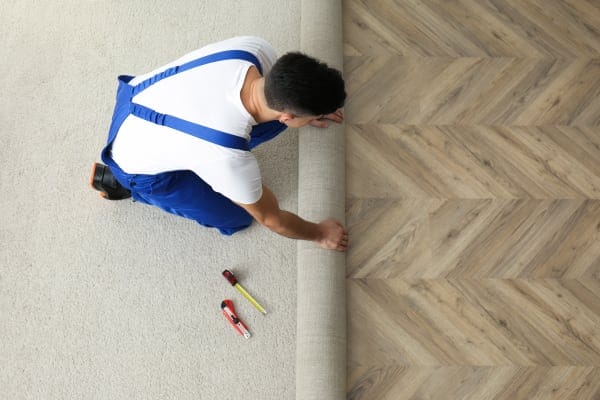
Carpet installation seems straightforward—until you run into unexpected problems. Uneven floors, stubborn old carpet glue, tricky room shapes—these issues can turn a simple job into a headache. But don’t stress. Whether you’re tackling the project yourself or working with a pro, knowing how to handle these common obstacles will save time, money, and frustration. Let’s break it down.
Removing old carpet and adhesive
Before you can lay a new carpet, the old one has to go. Sounds easy, right? Not always.
- Stubborn glue: If the old adhesive doesn’t budge, use a scraper and warm water mixed with dish soap. For tougher spots, a commercial adhesive remover or a heat gun can loosen the glue.
- Nail strips: Tack strips can be sharp and difficult to remove. Use a pry bar and gloves to protect your hands. If they’re still in good shape, consider reusing them.
- Padding residue: Some old carpets leave behind foam that sticks to the floor. A stiff brush or vacuum with a beater bar can help clear it out.
Fixing uneven subfloors
The carpet needs a smooth surface. If your subfloor is uneven, you’ll feel bumps and dips underfoot. Here’s how to fix it:
- Wood subfloors: Sand down high spots and use a leveling compound to fill in low areas.
- Concrete subfloors: Self-leveling concrete is your best bet. Pour it over uneven areas, let it dry, and smooth it out before laying the carpet.
- Squeaky floors: If you hear creaks, screw down loose boards before the carpet installation.
Handling tricky room shapes
Rooms aren’t always perfect rectangles. Hallways, closets, and angled walls make the carpet installation harder.
- Measure twice, cut once: Precision is key. Use a chalk line or laser measure to mark cuts before trimming.
- Seam placement: If your carpet has seams, place them in low-traffic areas where they’ll be less visible.
- Closets and nooks: Cut larger than needed, then trim to fit snugly. Tucking the edges under baseboards helps create a clean look.
Dealing with doorways and transitions
Carpet needs a smooth transition to other flooring types, like hardwood or tile. Without proper planning, you’ll end up with awkward edges.
- Transition strips: Use these to create a seamless flow between different flooring types.
- Trimming doors: If the new carpet is thicker, doors may drag. A circular saw or planer can trim the bottom edge to allow smooth opening and closing.
- Stretching issues: Loose carpet at doorways? Use a knee kicker or power stretcher to get a tight fit.
Handling humidity and temperature issues
Carpet expands and contracts with temperature changes. If you don’t account for this, you may end up with wrinkles or gaps.
- Acclimate the carpet: Let it sit in the room for 24-48 hours before the carpet installation so it adjusts to the temperature and humidity.
- Avoid installing in extreme conditions: High humidity can make the carpet absorb moisture, while cold weather can make it stiff and hard to stretch.
Contact our carpet shop in Auburn, Lynnwood, or Bellevue, WA
Carpet installation isn’t always smooth sailing, but with the right approach, you can tackle obstacles head-on. Removing old carpet, leveling the subfloor, and handling tricky cuts take patience, but they’re all manageable. Plan ahead, use the right tools, and don’t rush the process. Before you know it, you’ll be standing on a freshly installed carpet, proud of a job well done.
Our carpet shops in Auburn, Lynnwood, and Bellevue, WA, serve Redmond, Kirkland, Renton, and surrounding areas. Reach out to Nielsen Brothers Flooring today!